- Background
- Vision and Mission
-
Academic Staff
- Administrative Staff
- Industrial Advisory Board
- Quality Assurance Committee at faculty level
- Studies Committee
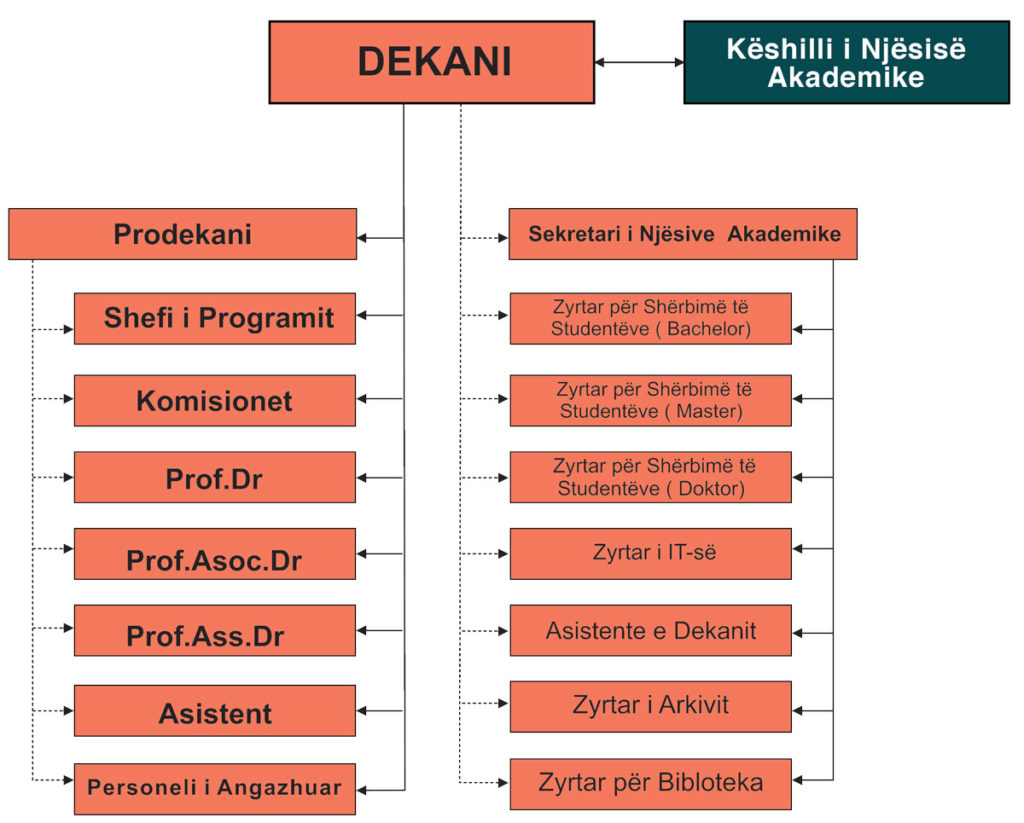
- Organogram
- Guideline of the Study Programs
- Employment Perspectives
- Cooperations
Background
Faculty of Education is one of the programs that are requiredin the labor market. The network of school in the country is expanding. Changes and developments based in Kosovo Curriculum Framework raise demand for primary education for which required qualified teachers for I-V grade. Qualification and preparation of teachers are requirement of the time.
The Faculty of Education currently has a high rate of employability for its graduates. They are hired in institutions of preschool and elementary level throughout Kosova. Faculty of Education in Public University “UKSHIN HOTI” Prizren remains one of the institutions who prepare e new teachers for primary school level and pri-primary in three languages, Albanian, Turkish and Bosnian.
- Program: Primary – Albanian
- Program: Pri-primary – Albanian
- Program: Primary – Turkish
- Program: Pri-primary- Turkish
- Program: Primary – Bosnian
- Program: Pri-primary- Bosnian
Teachers graduated in the Education Faculty gain knowledge and learn both the teaching and learning rules in different education fields, they as well will become familiar with relationships between educational processes on one side and the individual and society on the other. They acquire the full specter of special professional competencies required for the mastering of their study fields and/or disciplines they will work on in the future as professionals (teachers, advisers, etc).
Vision and Mission
Mission
The mission of the Primary Education Program aligns with the mission of the academic unit (Annex 2.1.1), specifically the Faculty of Education. The program is focused on delivering quality teaching through the application of interactive methods, aiming to equip students with the necessary competencies essential for adapting to changes in the era of innovation in education. The Primary Education Program offers opportunities for achieving a high level of academic knowledge, applied competencies, and skills through courses in communication, mathematics, pedagogy, psychology, social sciences, natural sciences, teaching methodologies, pedagogical practice, IT skills, and more. This enables students to build their professional careers in primary education and contribute to the development of a culturally inclusive and democratically-minded society.
Vision
Accredited since 2010, except for 2024 (a year in which re-accreditation was not pursued), the program adheres to market demands, the strategic priorities of the university (Annex 1.1.4) and faculty, Kosovo’s Higher Education Strategy, and European and global trends in higher education. To remain market-oriented, annual recommendations from stakeholders, students, and the Industrial Advisory Board (Annex 2.1.2) are considered. The board operates under the regulations for the establishment and principles of operation of academic unit advisory boards at the University “Ukshin Hoti” Prizren
- Learning Outcomes of the Program:
- Identify and analyze key theories of teaching and learning, applying them to primary education practice.
- Demonstrate a deep understanding of the national curriculum for primary education, identifying ways to adapt it to students’ needs.
- Explain fundamental concepts of child development, including cognitive, emotional, and social aspects.
- Plan and design a lesson, including clear objectives, engaging activities and assessment strategies, as well as using interactive and inclusive teaching methods, to adapt to students’ different learning styles.
- Resolve challenging situations in teaching using effective classroom management
- Integrate technology into teaching processes, employing digital tools to enhance student engagement and learning.
- Design and use various assessment instruments, such as tests, questionnaires, and student portfolios, to measure achievements.
- Reflect on their professional performance, identifying strengths and areas for
- Develop an ethical and professional attitude toward students, colleagues, and parents, respecting diversity and equity.
- Commit to promoting inclusive learning by involving students with special educational needs in the teaching process.
- Cultivate confidence and passion for teaching, demonstrating motivation to help students reach their full potential.
- Exhibit the ability to work independently and collaboratively, taking responsibility for their personal and professional growth.
Academic Staff
Full-Time Academic Staff
Personeli Administrativ
Zyrtare për Shërbim të Studentëve në Fakultetin e Edukimit
miranda.demaku@uni-prizren.com
Industrial Advisory Board of Faculty of Education at “Ukshin Hoti” University Prizren
- Members of the Industrial Advisory Board:
- Hilmi Rexha – Chairman
- Doruntina Rakaj – Vice-president, ALG “Loyola” Prizren
- Akif Gashi – member, Director of ShFMU Emin Duraku Zv. Director (Turkish community)
- Jygjel Spahi – member, ofnternational Maarif Schools of Kosova – Prizren
- Almir Sahiti – member, official,Directorate of Education and Science-Prizren
- Alen Azari – memeber,
- Nexhat Maçkaj – member, Senior Education Officer, Directorate of Education and Science-Prizren
- Hadis Haxhillari – member, student, Faculty of Education, University “Ukshin Hot” Prizren
- Katarina Gojani – member, teacher,Loyola” Prizren
- Qemajl Bytyqi – member, Inspector of Education, MEST-Ministry of Education, Science and Technology
- Bajram Pomak – member, NGO IDEA
- BKI members (without the right to vote) Ex-officio:
- Vedat Bajrami – member – ex-officio
- Mujdin Lutfiu – member- ex-officio
- Elsev B. Lopar – member – ex-officio
- Xhafer Beqiraj – member – ex-officio
Quality Assurance Committee at faculty level
- Quality Assurance Committee appointed by the Council of the Faculty of Education:
- Prof.ass.dr. Fatmit Mehmeti – President;
- Prof.ass.dr. Jasmin Jusufi – member;
- Prof.ass.dr. Artan Reshani – member;
- Msc. Mujdin Lutfiu – member;
- Std. Erblin Gashi – member;
- Quality Assurance Committee at faculty level
- 1. The Quality Assurance Committee at the faculty level consists of:
- 1.1. Quality Assurance Coordinator at the faculty level (an academic staff who is good in English);
- 1.2. A professor;
- 1.3. An assistant;
- 1.4. Secretary of the Faculty; and
- 1.5. A student with average grade over nine and who is good in English.
- 2. The Quality Assurance Committee at the faculty level proposes and approves the faculty council;
- 3. The duties and responsibilities of the Quality Assurance Committee at the faculty level are:
- 3.1. Monitoring of the learning process and reporting on the process of improving the process;
- 3.2. Organization for the evaluation process of academic staff, administrative services, study programs etc. is carried out using questionnaires and evaluation instruments;
- 3.3. Drafting the Action Plan for the implementation of quality standards at the faculty level and study programs;
- 3.4. Drafts action plans for implementing KAA recommendations at faculty level;
- 3.5. Analyzes curricula and courses, draft reports and takes care of the implementation of the recommendations;
- 3.6. Analyzes possibility through courses and proposes taking measures;
- 3.7. Monitors, collects and reports on data, on the degree of abandonment of the University,
- 3.8. Reviews and proposes measures to reduce the degree of abandonment of students from studies;
- 3.9. Monitors the degree of satisfaction of students with study programs;
- 3.10. Monitors teaching resources and, support for students;
- 3.11. Monitors and evaluates career development programs for graduates;
- 3.12. Analyzes the content of the research plan for scientific work;
- 3.13. Monitors and analyzes the efficiency of student evaluation procedures;
- 3.14. Monitors and analyzes teaching infrastructure and support services;
- 3.15. Monitors the implementation of program for excellence in teaching;
- 3.16. Monitors the implementation Plan on Updating the Student Services;
- 3.17. It is obliged to convey all reports, analyzes, and recommendations to the Quality Assurance Central Committee;
- 3.18. Holds at least ten meetings a year, or more as needed;
- 3.19. On January 30 and June 30 of each calendar year submits the work report to the Faculty Council, and in the Quality Assurance Central Committee. This report should include evaluation reports for each category based on the respective evaluation instruments.
Studies Committee
- Studies Committee of the Faculty of Education:
- Prof.asoc.dr. Fatmir Mehmeti– Chairman;
- Prof.asoc.dr. Soner Yildirim – Member;
- Prof.ass.dr. Gjyle T. Salihu – Member;
- Prof.ass.dr. Jasmin Jusufi – Member;
- Prof.ass.dr. Artan Reshani –Member;
- Student, Yllka Gashi – Monitoring;